The Long Journey That Led To Victory
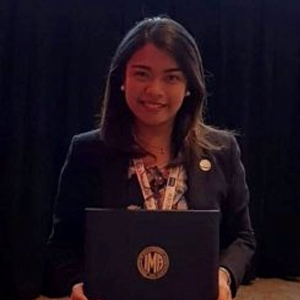
I think my passion for Management Accounting started out during the first semester of my senior year as an Accountancy student in college. It was the first time I ever encountered Cost Accounting and I was immediately fascinated by the practical applications. It definitely was not the easiest subject but I found myself being more diligent in this one more than any of my other subjects. Since then, I had always been more excited and interested about taking other Management Accounting courses until my 5th year in college. I guess it was the less rigorous and stringent rules involved in Management Accounting against Financial Accounting.

During that time, I seriously considered taking on work as a Cost Accountant in a private company by the time I graduated. So while my classmates were gunning for the Chartered Financial Analyst (CFA) certification, I was already playing with the idea of eventually being certified as a Certified Management Accountant (CMA).

It took me 4 years before I actually decided to finally pursue my CMA. Between the time I graduated and got my CMA, I got my Certified Public Accountant (CPA) license, pursued a career as a tax professional in a Big 4 auditing firm, and finally landed a position as the Head of Budget & Planning in one of the top food kiosk operators in the Philippines. It is a position I currently hold today and was one of the keys that eventually led me to get my CMA to benefit both my professional development and achieve my organization’s objectives. I was excited to finally be a management accountant in action and help my company lay out the groundwork of the budget and planning system that it follows today. I was fortunate enough that my superior, herself a college instructor and long-time supporter of learning, and upper management supported my desire to pursue this certification and agreed to sponsor my review and exams. And so I started the 6-month journey under the umbrella of Insights Financial Review Services.

It was not easy juggling the demands of a full-time job and finding time to prepare for the exams. I do have to say that taking the exams as a working professionals granted me a different and valuable perspective in approaching situational problems through real-life situations I may have encountered at work, lessons which I will not find in any textbook.

Weekends were spent in review classes and I dedicated at least 2 hours each weeknight to make sure I covered all the materials and answer at least 50 multiple choice questions. Consistency was key in keeping my study rhythm and making sure I don’t slack off even on the busiest of work days.

My scheduled exams came at one of the most hectic points during the year when projects were at their busiest and the budget season was kicking in. After sitting through each exam, I did not mind the wait as I went about business as usual.

When the results came late one night in November, I was overwhelmed with happiness at seeing the words of congratulations from the IMA and excitedly shared to my family, friends, and colleagues who tirelessly supported me throughout.

I didn’t expect to be overwhelmed again on January the following year when I got a text message from Insights CMA Review that I had actually landed a Certificate of Distinguished Performance award given by the ICMA Board of Regents, and had the chance to receive the it personally in San Diego at the prestigious IMA’s 100th Annual Conference.

All I can think about when I look back at my CMA journey and those 3 letters I can now attach to my name was how thankful I am for getting more than I bargained for when I started. It may have taken me longer than most but I eventually got there with the help of Insights CMA Review, the supportive management of my organization, family, friends and colleagues.

About the author: 

Pat graduated magna cum laude in BS Business Administration and Accountancy from the University of the Philippines Diliman and is a licensed CPA since 2014. She is currently the Budget & Planning Manager of one of the most beloved snacking companies in the Philippines and does financial consultancy for selected clients. She enjoys watching sitcoms and reading during her free time and is a proud dog parent to Muffin.

Sic Parvis Magna

Sic Parvis Magna” – Thus great things come from small beginnings, this was the belief of Sir Francis Drake, one of the most famous strategists and privateers that had lived in the 16th century. An aphorism I would adapt to remind me of where I want to be.

I’ve always viewed the accounting profession as a two way path – either you go for external reporting (financial statement preparation, audit, and taxation) or internal reporting (cost & management accounting, and consultancy). I already confided myself to take the internal reporting path because I believe it is dynamic between the two. Having been employed as a management accountant in a multinational BPO, I’ve experienced interacting with a lot of business executives and learning from them. It also has a great sense of responsibility because, as consultants, what you advise to leaders often stirs up the organization to that direction as well. Whereas financial accounting has guidelines in reporting fairly financial results to stakeholders, management accounting uses simple logic and straightforward computations in reporting results of operation while driving them to act on matters to improve sustainability or growth. It was only then natural for me to get the credential for management reporting the Certified Management Accountant (CMA) title.

I started to do some research on how to get it and my readings took me to the IMA site where I also decided that it would be the most relevant for me because the headquarters of my company is located in the US. I also learned that IMA is endorsing Wiley CMA Review materials as their partner so I hurried to their site to get information where I can get it. This is where I learned of Insights Financial Review School as the official distributor of the materials in Philippines. What was supposed to be an initial email regarding the price of study materials (Wiley CMAexcel is the approved study material) became the official start of my CMA journey.

I met Sir Angel and instantly laid him my plans on taking the exams. I told him that I will be taking it on October 2014 since I needed time to prepare both mentally and financially. But he challenged me to take the exams earlier in the May/June window! It was from here that he invited me to his office as it would be best to discuss it personally rather than email exchanges. Perhaps it was his genuine sense of desire to help that I accepted his challenge though I was extremely reluctant. So my plan was pretty simple, take Part Two in May as I would need more time to review it while Part One will be delayed to June because I have more familiarity on its exam coverage.

Unlike before when I prepared for the CPA (Phil.) where I was a full time student back then, now I’m a full time employee and a part time student. I was always amazed by stories of people who worked while taking CPA board exams and passing it. Now I have the chance to experience it (though I only have two comprehensive exam parts compared to their 8) and it thrilled me more than anything. This is where time management is a critical success factor. There has to be a balance between work responsibility, study and that thing called “life”.

I know this has been mentioned like a million times before but I guess what they fail to emphasize is CONSISTENCY, all those careful planning will mean nothing if the plan will not be followed strictly. I was so determined to follow my schedule that even when I close my eyes, all I see is the word consistency in order to remind me of the task at hand. I made it a point to always answer multiple choice questions a day, even if it’s only for five items. I remember I had to receive notes and questions, a day before the exam just to make sure that I’d get the net tax effect on cash flow from sale of old asset in capital budgeting.

Of course this journey would not be one without any sacrifices. There was less socializing for me during company events; no summer outing in Palawan or Boracay; no scheduled trips for an out of town with family or friends. Virtually any time I could save away from work, I devoted to study. There were times that I wanted to just quit only to realize that it was I who wanted this in the first place and I have no right to complain. It was during these times that my determination was tested. Whenever I feel exhaustion, I’d tell myself to go back to the day I decided I’ll be a CMA with all the reasons I had back then and how I can let down all the people who helped me as well. Surprisingly it’ll move me off my bed and get to work on answering those exercises. Again, consistency is the key because it becomes a habit. And when it becomes a habit, you don’t have to drag yourself to answer questions, like breathing it becomes second nature to you.

A support system is very important to any candidate who wishes to pass the exam. I was very fortunate to have very supportive people around me while I was doing this. I had the best coach in Sir Angel, up until now I kind a feel the shiver when he messages me on Facebook with “How are you Ken?” and then I’d be like “Oh my! I haven’t finished yet the questions he gave me to answer!” A very supportive family who prepares the food I eat to the clothes I wear. They make sure everything is taken care of and that I have nothing to worry about. My team and bosses at work were helpful too. They would let me leave office earlier than usual so I can have ample time to review.

I believe the most important of all, the Almighty Father who had given me the opportunity to experience all of these. I would take this time to say my deepest “Thank You” to all. Know that none of this would have been possible if not for your individual contribution, patience and understanding.

I also think that a candidate must also stay healthy by taking necessary nutrition during the course of preparation. Remember that all the hard work will not pay-off if you’re sick during the examination day. Also, have time to relax. Putting too much pressure on something will break it and it could be you. In addition, reading success stories from other candidates who passed was helpful for me. It made me more inspired knowing that they have struggled too but was able to overcome it; if they did it, then so can you and I!

Finally I know that passing Part Two is only a portion of the beginning. I’m still waiting with Part One results and I’m extremely hopeful that I make it as well. I think the real challenge still lies ahead, after the certification has been awarded. It must be put into good use – by giving value in the organization. More than the mastery of knowledge, I believe that the CMA certificate is also a testament to the bearer’s character.

A CMA is a proven challenge taker, one who focuses the drive and perseveres to achieve their goals to become successful. I hope with all of this I am able to spark a fire somewhere and I would strongly recommend that you act upon it swiftly.

For always remember, great things come from small beginnings – SIC PARVIS MAGNA.

About the Author – Kenneth Lapez is a graduate of Colegio de San Juan de Letran in 2006, and passed and earned his CPA license in the same year. He is presently connected with Accenture Philippines as a Finance Specialist for more than five years now. Eyeing for a solid role as business consultant, he pursued the CMA designation early this year and had recently completed the requirements of the CMA Program, passing both parts of the CMA examinations in May/June 2014 testing window.

Reaching for the Star

From being a scavenger of junk to being the first ever The Voice Kids Grand Winner… That is Lyca Gairanod’s Cinderella story.

Her powerful performance of Basang basa sa Ulan, originally by the local band Aegis, captured the heart of the viewers thus earning her a standing ovation not to mention getting the highest percentage of votes. From not having enough to now owning millions-worth of properties and cash prizes, her life was changed forever. After nine years of poverty, Lyca was able to turn her life around through her God-given talent in singing.

As used by Milo for its tagline, great things indeed start from small beginnings and Lyca is the epitome of this popular saying.

The kid’s story is close to my heart because it reminds me of a friend’s journey to being a Certified Management Accountant (CMA). He did not scavenge junk but instead, scavenged a lot of disappointments before he finally became a CMA.

Failing three times was not easy. It broke his self-esteem in shattered pieces. To fail once was tolerable, twice was breaking but three times? Can you just imagine how so down he felt to not make it the third time? However, like Lyca, he was determined to make his dreams happen. He perfectly knew that the only way was to take the exam again.

And so he did.

He used his disappointments to push himself to give more. He hung on to his faith that he was meant for greater things such as being a CMA, and beyond. He studied night and day and in between breaks during weekdays and was almost an anti-social during weekends. He treated his goal as if his life depended on it. He believed in himself and never entertained negative thoughts during his conquest.

After two to three months of waiting, his determination and commitment to win over his failures rendered him positive result. Alas, he passed. True enough, nothing worth having comes easy. He’s now working as a Senior Finance Analyst in one of the biggest utility companies in the Middle East.

I cannot picture the amount of positivity that my friend still has even after failing three times. Could you?

I guess it’s really just about perspective:  Seeing the glass as half-full rather than half-empty.

Nonetheless, the fact that he never stopped believing in himself played a vital role on his success. His is a story that is worth sharing and also inspiring in so many ways. Perhaps, it’s through his story that we may realize that our failures do not seal our future. What we do after failing in our individual endeavor does. It is not what we achieve but the setbacks that we overcome that really matter. That’s what makes the fruit of every labor and sacrifice so much sweeter.

How we are able to rise above unfortunate situations is what makes us a better person. Like my friend, let us use our failures and struggles to better our self, equipped with the realization that obstacles are thrown our way to test us and our resolve from time to time on how much we really want to achieve our goals.

In The Face Of Strong Adversity

There are times when we believe we have on hand a good plan to achieve our aspirations in life. Just for the sake of hitting the mark, we prepare ourselves physically and emotionally, willing to do everything humanly possible, and apply every thinkable strategy to mitigate, if not obliterate, the possibility of failure. After all, who would like to fail?

Sometimes, though, what we dread most ends up happening anyway. Defeat stares upon us despite following our master plan with utmost diligence. Things go awry as we execute our plan. We’re left to wonder where we had gone wrong; what we could have done better that could have averted the negative result.

Indeed, earning the prestigious CPA title means confronting a worthy adversary. But if, in the face of strong adversity, we decide to surrender our position, feel daunted at the fear of failing once again, if we continue to focus our mind at the fear of receiving another failing score, years from now we will find ourselves being more disappointed by the things that we didn’t do than by the ones we did.

Setbacks happen every now and then in our personal lives, even in our quest for professional and career development. It’s part of every human’s very existence. Not being able to achieve our goals can tend to bring us down and lead us to think that everything we did was just a colossal waste of time.

If you’ve reached this point, there are but two ways your life could go, and it all depends on your attitude and how you accept this “hump”. You could view it as a total failure or as a sign that you shouldn’t have pursued your dream to become a CPA in the first place, which then make you give up on your goal altogether and train your sight somewhere else.

Otherwise, you could view it as an opportunity to learn and do better. As daunting as it may sound, the latter requires uncommon valor, and makes you summon every ounce of courage from inside of you. After all, it’s never easy to pick yourself up, and give it one more again.

Most people will just choose to withdraw, brood about their mistakes, and then stop trying again. Well, it’s the easy way out anyway. But if you’re truly set on achieving your goal, come strong wind and high waters, you will push forth, sail on, ‘til you cross the finish line.

Being able to handle temporary defeat is the key to becoming triumphant in this journey. Many candidates tend to feel utterly discouraged when they encounter setbacks, and allow a failed exam to consume all their energy and will to go forward. Of course, when we don’t achieve our goals, we tend to be plagued with self-doubt, thinking that we’re not good enough, that maybe we should stop our obsession to earn the CPA title.

Rather than seeing it as a failure or as something that puts an end to your hopes and dreams, look at it for what it truly is:  A mere temporary setback that should not hinder you from reaching for your goal. Run a self-check and do the following:

1. Recap what you did. This is a good way for you to see where you went wrong and what you should do better next time.

2. Accept that things didn’t go as expected, and move on. You could dwell on your problems and your mistakes, but that won’t change your situation or bring you any step closer to your goal.

3. Prepare better. This is an offshoot of #1. Once you know where you went wrong, you will be able to take appropriate measures to prevent foreseeable problems in the future.

4. Give yourself time to recover. You don’t have to go for your goals right away. You need time to gather your wits together, as you plan your next move.

Make no mistake. The CPA title is something not to be missed. When things don’t go according to plan, always remember that missed goals are not missed opportunities. Instead, they are opportunities to do things better on your next try.

Allow me to leave you with this inspiring quote:

“The price of success is hard work, dedication to the job at hand, and the determination that whether we win or lose, we have applied the best of ourselves to the task at hand.” – Vince Lombardi

Never Too Late, Never Too Old
Learn to Lead

Do you know what Richard Branson’s greatest motivation is? It is “to keep challenging myself. I see life almost like one long university education that I never had—each day I am learning something new“.

Most people like to say that they’d like to do and experience everything that they can while they’re still young, insinuating that after a certain age it might be too late. This young generation of technocrats believes that people stop being motivated and creative as they reach middle age.

On the brighter side, this way of thinking can fuel your desire and determination to see and do everything possible while you still have the energy and will to excel at the early stages of your life. I personally know of one colleague who, after earning his baccalaureate degree in accounting and passing the Philippine CPA examination, immediately pursued the MBA course, then the CMA certificate thereafter. At the age of 25, he has a CPA, MBA and CMA title. If you think these are remarkable achievements, wait ’til you hear this other one. He completed his accounting degree and passed the Phil. CPA exam in 2011 at age 20. As family migrated to the U.S. he took and completed all four parts of the Uniform CPA examination last year. This June, he took Part 1 of the CMA examinations.

Sometimes, though, it makes you think that once you hit a certain age and you feel you still haven’t achieved anything in your professional career, you start to believe that you have pretty much failed and that you can’t do anything about it anymore.

Unfortunately, there are a lot of people out there who think that they’ve let so many chances pass by and that they already failed to grab any opportunities in life. Others also tend to adopt the idea that they’re just too old to try and learn anything new, and that whatever they know is sufficient. Thus, many of them just plod along without striving to be better at their jobs or in life, and without exploring any possible new opportunities that could improve their career. They just stop being enthusiastic anymore. Some people become complacent as they mature, and no longer have interest in learning current industry trends. I am glad I fought this off as I realized that even in mid-40s I could still motivate myself to pursue international certifications (CMA and U.S. CPA).

It is important for us to realize that age is indeed nothing more than a number. It doesn’t say anything about one’s ability to learn something new. It doesn’t restrict us from achieving. And it certainly shouldn’t be a barrier to how much we could change and how much better we could become. Opportunities should not just be restricted to younger people, after all. For “old-timers” (like the author), it is imperative that we recognize that having the right attitude and positive outlook in life is still the key factor to success. Equally so, being cautious should not be mistaken with looking at situations or opportunities negatively.

In addition, you want to stay relevant in your field, or at the very least be able to understand what other people are talking about. You don’t want to get left behind, and you certainly don’t want to become the kind of person who just looks on as new developments arise and are unable to get on board because you didn’t bother to learn new things. It is the ability to adapt and embrace change that can bring success to us as professionals.

So the next time you catch yourself thinking that you’re too old to try something new, take a course, or learn how to use a new gadget or software, stop and think for a few minutes. By merely contemplating to pursue a post-graduate course, or to upgrade your skills by enrolling in personality development training or seminars, these already are important indicators as these circumstances show that you still want to learn.

Don’t let others write you off just yet; prove you still can, despite your age.

Making time to improve yourself

Who isn’t busy these days? It often seems like there are so few hours in a day for us to accomplish everything that we need to. Just think of all the hours we spend at work, the time we spend getting to the office and traveling back home, and the precious few hours of each day we have for our family. Given everything that’s going on in our lives, who actually has time to make room for anything else?

That’s something that so many people often say about themselves, and that often serves as an excuse for why they didn’t get started on a personal project, why they didn’t get to exercise that day, or why they aren’t pursuing other activities that will improve their lives, boost their careers, and teach them new skills. But if you find yourself blaming your busy, hectic life all the time for your inability to work on improving your life, you might want to step back first and take a good hard look at yourself and your schedule.

First of all, you have to consider whether or not you’re really as busy as you seem. Of course you have work, other hobbies, and your responsibility to yourself and your family. But there are inevitably some quiet spaces between each activity. What do you do during those moments? Do you sit back, relax, and do nothing? Do you spend them online? Are there any other things you do which are unnecessary and are done simply for you to kill time?

Second, you have to remember that every minute counts when you’re trying to learn a new skill or update your knowledge. If you’re really pressed for time, you don’t need to spend long hours studying and practicing. Block off at least a half-hour each day, and spend that half-hour on yourself, without any distractions. It might help for you to learn to give up some non-essential activities to make room for learning–sure, spending hours on Facebook or playing games is fun, but they don’t contribute to your improvement. You’ll find that giving up some activities is a small price to pay for long-term self-improvement.

The important thing is for you to really commit to your intention to improve yourself. No one will do it for you, and no one will rearrange your schedule to allow you to work on your self-improvement efforts. It all starts with you, and once you’ve learned to prioritize yourself and on becoming better, to commit to your goal, and then really make time for it, you’ve already taken a very big step towards self-improvement.

Why You Should Update Your Skills

When people have been in a particular field for a long time, there are those who tend to fall into complacency and think that they know everything that there is to know about their career or the industry. It’s easy to think that your experience and the number of years you’ve spent in your career are sufficient qualifications–until you realize that everybody else has moved on, that they know more than you do, and that your skills are hopelessly updated. No matter how long you’ve been in your career, you have to keep moving forward, making sure that you know the latest trends, theories, and methods in your field, that you study them, and apply them in your job. Otherwise, you risk getting left behind and you’ll have to play catchup with everyone who took the time to learn something new.

Your field is constantly changing. Therefore, you have to keep up with new ideas if you want to remain ahead of the pack. At the same time, ensuring that you have the best, most sought-after skills increases your value to the company and keeps you competitive. And if you’re gunning for a promotion or a new job, you want to make sure that you are the most qualified candidate available.

Workshops and seminars are always available for those who are interested. Your employer might also provide training to employees, which is something you should definitely take advantage of. Otherwise, you can ask your colleagues for information on any trainings, or you can approach relevant organizations. Of course, many workshops charge a certain fee, but you should just consider the fee as an investment in your future and your career.

It’s not just the skills you use in the field that you should work on. It would also help for you to update your computer skills, to start with. It’s practically unthinkable these days for any professional to not be familiar with a computer. At the very least, you should be well versed in an office productivity suite such as Microsoft Office. It would also help for you to learn to establish your Web presence and understand social media, as being able to do so can help put you in touch with potential clients and assist you in networking.

Ultimately, updating your skills keeps you fresh, knowledgeable, and relevant–and that’s something you want to be if you want to stand out among all the professionals in your field.